OpenAI launches a separate ChatGPT experience for teens
OpenAI unveiled ChatGPT for Teens on Aug. 18, 2026, a dedicated experience for users aged 13 to 17. It adds stricter content safeguards, parental controls and study tools that discourage homework shortcuts. An age-prediction system routes accounts it estimates to be under 18 into the teen mode automatically.
OpenAI on Tuesday, Aug. 18, 2026, unveiled ChatGPT for Teens, a dedicated version of its chatbot built for users aged 13 to 17. The company said age-appropriate protections will be on by default, while parents can manage settings and receive safety notifications. Users who state they are 13 to 17, along with accounts that OpenAI's age-prediction system estimates are under 18, are placed into the teen experience automatically. The prediction system weighs signals such as the topics an account discusses, the hours it is active and how long it has existed.
Content safeguards were strengthened around self-harm, eating disorders, violence, dangerous activities and sexually explicit or graphic material. OpenAI is expanding parental safety notifications to cover certain eating-disorder-related situations. The chatbot is barred from using romantic language or terms of endearment with teens, and it is more strongly instructed not to suggest it has feelings, consciousness or emotions. The company said the changes are meant to reduce anthropomorphism and emotional dependence. Teens will also get more frequent break reminders during extended sessions, prompts noting they are interacting with an AI, and warnings before uploading potentially private or sensitive images.
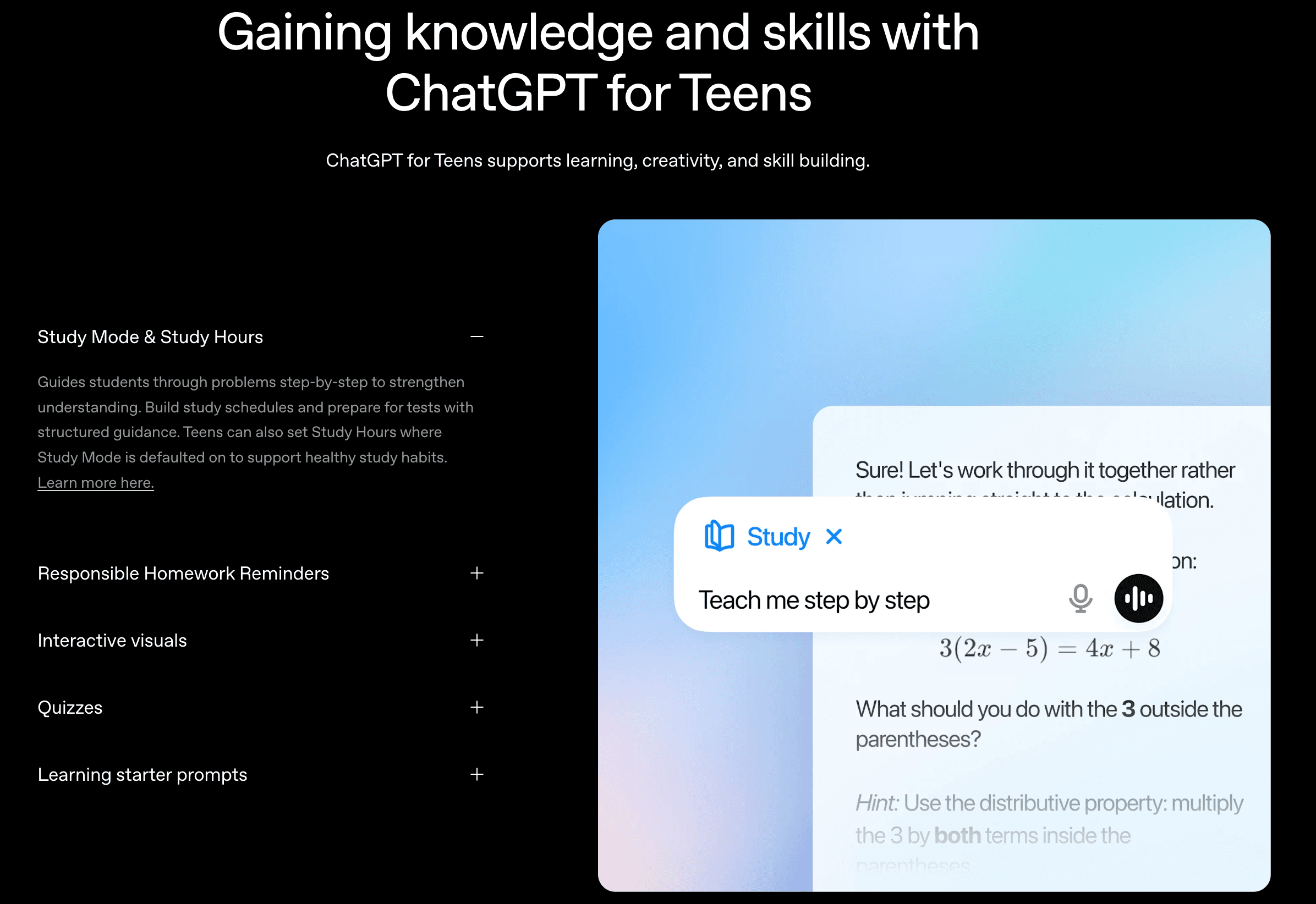
On the education side, the teen experience includes Study Mode, which offers guiding questions and step-by-step support, along with quizzes and learning visualizations. New "responsible homework reminders" trigger when a teen appears to be shortcutting an assignment rather than working through it, steering the user toward Study Mode. Parents and teens can set Study Hours, periods when Study Mode is enabled by default. OpenAI said the safeguards follow the under-18 principles in its Model Spec, informed by developmental science and expert guidance. The company also announced a partnership with CodeAI to help teens learn how AI works and how to question it.
The launch arrives as OpenAI faces mounting legal pressure over its interactions with young users. The company is defending several lawsuits, including one filed by the family of a 16-year-old who died after extended interactions with ChatGPT. The Federal Trade Commission has opened an inquiry into how OpenAI, Meta, Alphabet, xAI, Snap and Character.AI protect minors. OpenAI pledged in 2025 to expand safeguards for younger users and those in crisis, and introduced parental controls that September.
Teen use of AI is already widespread. A Common Sense Media study found that nearly three-quarters of U.S. teens say they use AI for companionship, and more than half of those do so at least a few times a month. Lauren Jonas, OpenAI's head of youth and families, argued that without a safe space built for them, teens will simply move to less safe alternatives. Common Sense Media founder and CEO Jim Steyer countered last year that "Social AI companions are not safe for kids," saying such systems are designed to create emotional attachment and dependency in developing adolescent brains. Access is widening through schools as well: Google last week turned on its Gemini chatbot inside Google Classroom for K-12 schools.