xAI Unveils Grok 4.5, Which Musk Calls an 'Opus-Class' Model at Lower Cost
Elon Musk's SpaceXAI released Grok 4.5 on July 8, 2026, built for coding and agentic work. Musk described it as "an Opus-class model, but faster, more token-efficient and lower cost," priced well below rivals' top models.
Elon Musk's AI company SpaceXAI released Grok 4.5 on July 8, 2026, presenting it as its most capable model yet. It marked the company's first major launch after going public and acquiring the coding startup Cursor. Grok 4.5 is positioned less as a consumer chatbot and more as a tool for coding and agentic work, targeting tasks such as writing code, drafting emails and presentations, clerical work and research.
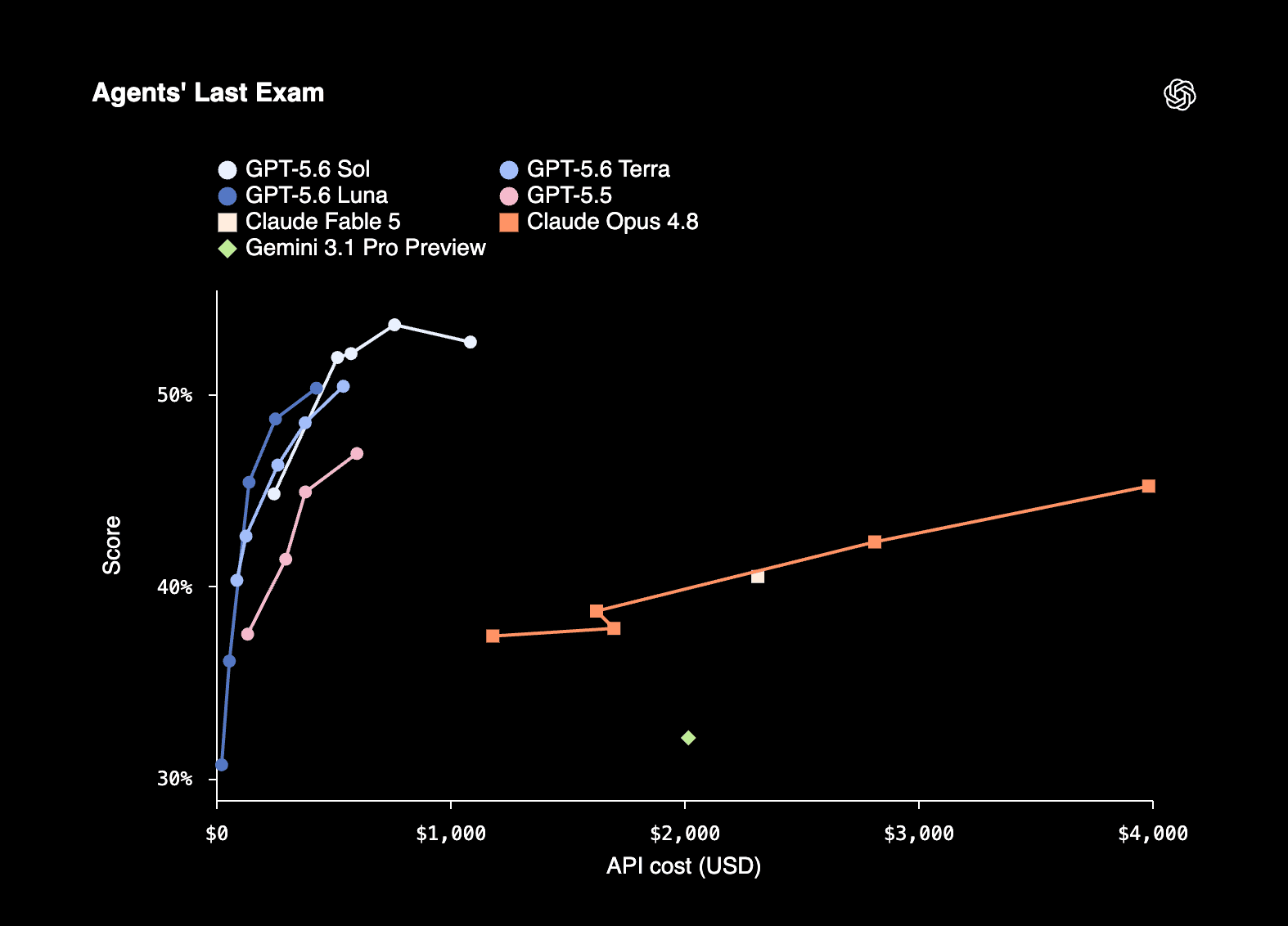
In a post on X, Musk compared Grok 4.5 to Anthropic's high-end Opus model, calling it "an Opus-class model, but faster, more token-efficient and lower cost." In a follow-up, he said internal assessments show the model is "roughly comparable" to Opus 4.7 but much faster at generating results. The company said the model's main edge is efficiency: thanks to "twice greater token efficiency" than peers from other frontier labs, it can handle similar work at around half the cost.
On pricing, Grok 4.5 costs $2 per million input tokens and $6 per million output tokens. By comparison, Anthropic's Opus 4.7 and 4.8 run at $5 for input and $25 for output, while its strongest model, Fable 5, costs $10 for input and $50 for output. OpenAI's new GPT-5.6 Sol is priced at $5 for input and $30 for output, with its low-cost Luna version at $1 for input and $6 for output. In benchmarks shared by the company, Grok 4.5 scored 83.3% on Terminal-Bench 2.1 and 64.7% on SWE-Bench Pro, outperforming Opus 4.8 on some tests while falling just short of leading models on others.
At launch, Grok 4.5 became available through Grok Build, in Cursor across all plans, and via the SpaceXAI console, though it is not yet accessible in the European Union. The release landed during an intense week for the AI race: OpenAI broadly launched GPT-5.6 and introduced its GPT-Live voice series around the same time. With token costs becoming a major concern for heavy AI users, Grok 4.5's price-efficiency claim could give the company a meaningful competitive advantage if it holds up in practice.