Karpathy Scored All 342 US Occupations on AI Exposure: Screen-Based Workers Face the Highest Risk
OpenAI co-founder and former Tesla AI Director Andrej Karpathy scored 342 US occupations covering 143 million workers on a 0–10 AI exposure scale using Bureau of Labor Statistics data. The analysis revealed that jobs paying over $100K averaged a 6.7 exposure score, confirming that screen-based, knowledge-work professionals face the highest disruption risk from current large language models.
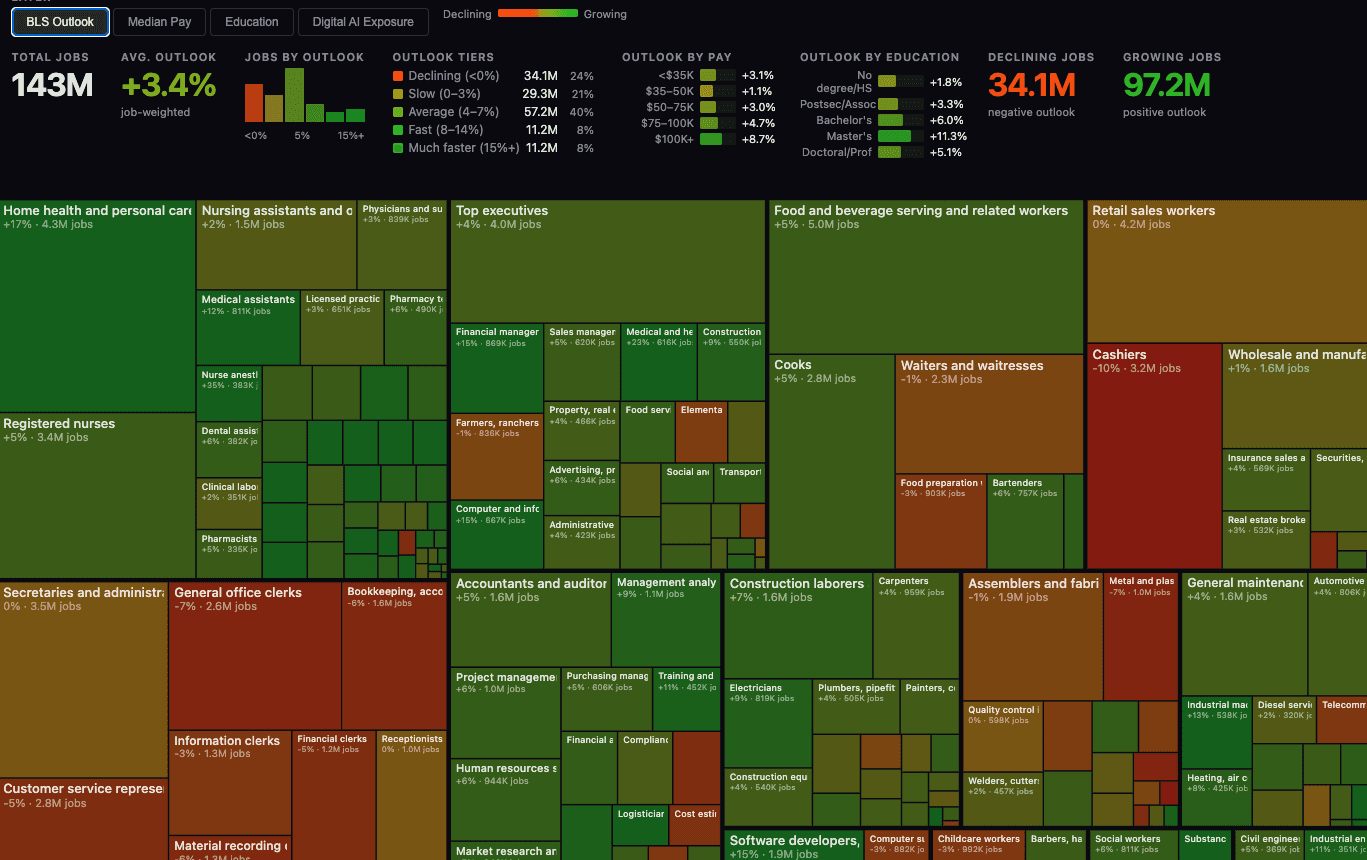
Andrej Karpathy, one of the most influential figures in the AI world, quietly dropped a bombshell over the weekend. The OpenAI co-founder and former Tesla AI Director published an interactive analysis scoring 342 US occupations on their exposure to artificial intelligence, using data from the Bureau of Labor Statistics Occupational Outlook Handbook. Covering 143 million jobs across the entire US economy, the study assigned each occupation a score from 0 (minimal AI exposure) to 10 (fully automatable by current LLMs). The core finding was stark: if your work happens primarily on a screen, AI is rapidly closing in on your profession.
The weighted average AI exposure score across all occupations came in at 4.9 out of 10. However, the salary-stratified data told a far more dramatic story. Occupations paying over $100,000 annually averaged an exposure score of 6.7, while those earning under $35,000 averaged just 3.4. This inversion challenges the long-held assumption that investing in education and pursuing high-paying knowledge work provides career protection against automation. Because large language models excel at processing digital information rather than manipulating physical objects, the most educated and highest-paid professionals find themselves paradoxically the most vulnerable to AI-driven disruption.
Karpathy’s methodology involved feeding BLS occupational descriptions into an LLM to assess each job’s automation potential. The visualization uses a treemap format where block size represents employment volume and color indicates exposure level. Shortly after the analysis went viral, Karpathy deleted the GitHub repository while leaving the website live. He described the project as a two-hour “vibe coded” exercise inspired by a book he was reading. The deletion appeared motivated by discomfort with how definitively his exploratory analysis was being cited, especially after Elon Musk amplified it by declaring that “all jobs will be optional.”
Experts caution that exposure should not be confused with displacement. A job scoring 8 out of 10 does not mean 80% of those workers will lose their jobs; rather, it suggests that a large share of task content could theoretically be performed by current LLMs. Software developers scored 9/10, yet demand for software could grow as each developer becomes more productive. The study also has a methodological circularity: using an LLM to score how replaceable jobs are by LLMs. Furthermore, low-scoring physical occupations face their own automation threats from robotics and autonomous vehicles. Karpathy’s analysis should be understood as a visualization exercise rather than a prediction — but one that offers a powerful and uncomfortable glimpse into where AI capability overlaps with today’s job descriptions.
Repo : https://github.com/karpathy/jobs?tab=readme-ov-file
Live Demo : https://karpathy.ai/jobs/