Behind Claude Code: How Anthropic's Autonomous Coding Agent Works and Best Practices to Master It
Anthropic's terminal-based AI coding agent Claude Code is far more than a simple chatbot. With its agentic loop architecture, built-in toolset, and proven best practices, it's fundamentally transforming software development.
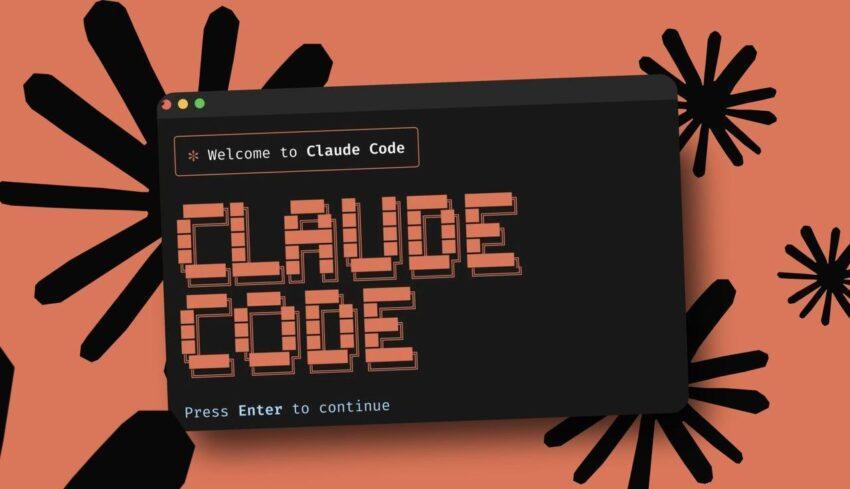
Anthropic's Claude Code is quietly engineering a powerful revolution in software development. Launched as a limited research preview in February 2025, the tool reached general availability within just three months and surpassed a billion-dollar annualized revenue milestone by November 2025. Unlike traditional AI coding assistants that offer autocomplete suggestions within an IDE, Claude Code takes a fundamentally different approach: it operates directly in the terminal, interacting with the file system and command-line tools. With over 500,000 active developers now using it, the tool has positioned itself not as a simple helper but as a fully autonomous coding agent.
At the heart of Claude Code's technical architecture lies an elegantly simple "agentic loop." When a user assigns a task, the system works through three blended phases: gathering context, taking action, and verifying results. These phases flow seamlessly into one another as Claude continuously employs tools — whether searching files to understand code, editing to make changes, or running tests to validate its work. The core loop pattern is remarkably minimal: execute tool calls, feed results back, and repeat until Claude produces a plain text response without further tool requests. This single-threaded design deliberately avoids the complexity of multi-agent swarms, prioritizing debuggability and reliability over flashy orchestration.
The built-in tools powering the agent fall into five primary categories: file reading and searching, code editing, command execution, web research, and external service interaction. Each tool invocation generates information that feeds back into the loop, informing
Claude's next decision. For example, when asked to "fix the failing tests," Claude runs the test suite, reads error messages, locates the relevant code, makes edits, and re-runs tests to verify the fix. When the context window approaches approximately 92% capacity, an automatic compaction mechanism summarizes conversations and migrates critical information to long-term storage. Claude Code also offers extensibility through MCP (Model Context Protocol) for connecting external services, hooks for automating workflows, and subagents for delegating tasks.
When it comes to best practices, experts converge on three critical strategies. First, carefully configuring the CLAUDE.md file with project-specific rules, architectural decisions, and coding standards — this file serves as Claude's most important reference for understanding a project. Second, adopting the "plan then execute" workflow for complex tasks; separating research and implementation through Plan Mode reduces architectural errors by up to 45% on multi-file tasks. Third, managing the context window as the most valuable resource: starting fresh sessions with /clear for new tasks, including tests and expected outputs so Claude can self-verify, and continuously monitoring token usage. Developers who rigorously apply these practices report productivity gains of 40 to 60 percent.